A great shave does not come from a single product. It comes from a series of small, deliberate choices that work together: how you prep your skin, the lather you build, the brush you use to massage and lift, the razor that suits your technique and growth patterns, and the blade that pairs with it. Get those right and even a coarse beard can feel effortless to mow down. Miss one and you often pay with irritation, tugging, or an uneven finish.
I have spent years chasing consistent results, from early experiments with cheap disposable razors to the first time a safety razor taught me what sharp really feels like. Along the way I learned that equipment is only half the story. Water hardness, whisker density, stroke angle, and skin recovery matter just as much. The “perfect shave” is personal, but the foundation is universal. Here is how I build it and how you can adapt each step to your face.
What prep really does
Think of whiskers as tiny strands of keratin that become significantly softer after a few minutes of hydration. Under a microscope, a dry hair can be nearly as tough as copper wire of similar thickness. Give it warm water for two to three minutes and it loses that spring. That is why the difference between a rushed sink splash and a deliberate prep shows up immediately in blade feel. The edge glides instead of chattering. The razor stays on track through swirls on the chin and along the jaw.
I start with a warm rinse, not scalding. Too hot and you swell the skin, which makes closeness harder and increases post-shave redness. Work a mild, fragrance-free face wash into the beard area, then rinse thoroughly. The goal is to clear oil and debris so your shaving soap can bind water and create a slick cushion. If you shave after a shower, you get most of this for free. If not, press a warm, damp towel to the beard for a minute. It is not a spa ritual, it is just consistent hydration.
Pre-shave products have their place. A lightweight glycerin-based gel or a few drops of jojoba spread thin can help in cold, dry climates where lather dries quickly. Heavy oils can blunt blade feel and make rinsing a chore. Use them sparingly, especially with a straight razor or Shavette where tactile feedback keeps you safe.
Soap matters more than the label suggests
Shaving soap is not regular soap. Good soap lathers dense and elastic, pulls in water, and leaves a slick film. That film is your insurance against micro-stutters that cause weepers and burn. Creams can do the same job, and quality varies across both categories, but a tallow-based puck or modern vegan base with stearic acid and butters delivers on glide and cushion when dialed in.
Hard water complicates lather. It steals your https://classicedge.ca/collections/strops-sharpening-stones bubbles by binding with fatty acids. If your sink leaves scale, bloom the puck with a few drops of warm water while you soak your brush, and load longer than you think you need. Distilled water is a hack for travel when hotel taps are unpredictable. A pea of unscented glycerin added while building lather can boost slickness without upsetting the formula.
Fragrance is optional. Some of the best bases come with bold scents, but fragrance can trigger irritation, especially around the neck. If you have trouble with post-shave redness, test unscented versions of soaps you like. I keep one unscented soap in rotation for days when my skin is tired from sun or wind.
Getting your brush right
A shaving brush does three jobs: it builds lather, it lifts hair, and it gently exfoliates. Boar, badger, and synthetic all work. The differences are feel, water handling, and maintenance.
Boar brushes need a break-in period. After a dozen shaves the tips split and soften, giving you a scrubby feel that excels at soap loading. Badger, especially silvertip, feels luxuriant and holds a lake of water, but it can be too floppy in tall lofts and needs careful squeezing to avoid a watery lather. Modern synthetics have come a long way. They dry fast, rarely shed, and whip up lather quickly. If you travel often, a synthetic brush removes the worry of packing a damp knot.
Knot size and loft matter more than the animal. A 24 to 26 mm knot with a modest loft works for most faces. Too large and you paint your ears, too small and you spend half the time reloading. The handle should feel secure when wet, especially if you bowl lather.
Face lather or bowl lather, choose the method that fits your routine. Face lathering gives you direct control of water and encourages you to spend time massaging the lather into the grain. Bowl lathering reduces mess and lets you watch the texture shift from bubbles to a glossy sheen. I switch depending on mood and schedule.
Building a lather that protects and glides
Thin, slick lather is perfect for a straight razor or Shavette where the edge is long and unforgiving. Thicker, yogurt-like lather suits a safety razor because it suspends whiskers and helps the cap and guard slide consistently. The sweet spot is glossy with tiny bubbles and stretches into a ribbon when lifted.
A simple sequence works even with new soaps:
- Load the brush on the puck for 20 to 40 seconds until the tips look pasty, not foamy. If the soap is soft, lighten the pressure to avoid overloading. Add water gradually as you build. A few drops at a time, work the brush in circles and light paint strokes until the lather turns from airy to dense. Stop when it shines and clings.
That two-step cadence avoids the most common mistakes: underloading and adding too much water early. If the lather feels sticky on the face, add a touch more water. If it feels runny and collapses, you diluted it; go back to the puck for a quick reload.
Razor choices and how to match them to your skin
This is where preference and technique connect. A safety razor can be mild or efficient. A single blade razor includes safety razors, straights, and Shavettes. Multi-blade cartridges have their place for speed, but they mask technique. If you want to refine skill and reduce irritation, stay with a single edge.
The Merkur 34C is a reliable benchmark. The weight is balanced toward the head, the handle length is manageable, and the shave is mild enough for daily use while still capable of a close finish with good prep. If you are new to double edge razor blades, a 34C plus a sampler of blades teaches you quickly which edges sing on your skin.
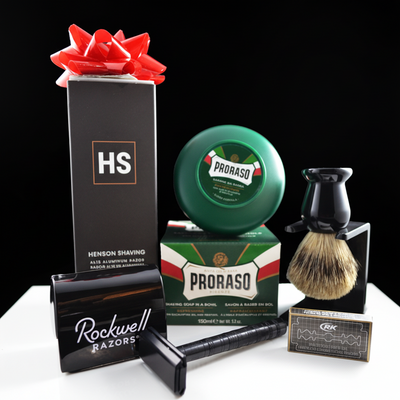
Henson Shaving built its razors around tight tolerances and a fixed shallow angle that guides your hand. The Henson razor feels almost like a guardrail. If you keep the cap flat to the skin and let the handle angle follow the head geometry, the blade becomes hard to overexpose. For many, that means fewer nicks and easier buffing on tricky spots. The brand’s presence in Henson Shaving Canada makes sourcing straightforward if you are north of the border. Choose the aggression level that fits your beard density. Light beards do well with the mild; coarse beards often prefer medium.
Straight razors and Shavettes demand focus but reward it with unmatched sensitivity to angle and pressure. A well-honed straight on hydrated whiskers hardly feels like it is cutting. A Shavette uses disposable half-blades and feels sharper and less forgiving, which some barbers prefer for lineups and against-the-grain detailing. If you go this route, respect the learning curve. Short strokes and skin stretching are mandatory, and a thin, wet lather helps you track the edge.
Disposable razor options are convenient for travel and gym kits, and a fresh cartridge every few days can deliver quick results. The downside is cost over time and more blades in contact with the skin, which can lift and cut below the surface on curly beards. If you get ingrowns, a single blade razor often solves the problem by cutting at skin level.
Blade selection without the hype
Razor blades vary in sharpness, coating, and smoothness. The same blade can feel different depending on the razor. That is why a sampler pack is a better investment than a 100-count tuck until you dial in a match. Double edge razor blades from brands like Astra, Voskhod, Feather, Gillette, and Personna each have a fan base. General tendencies hold: Feather is very sharp and demands light pressure; Astra is a good middle ground; Personna is often smooth with a gentle start. The ideal blade is sharp enough to cut cleanly and smooth enough to forgive micro-variations in angle.
Change blades on a schedule, not only when they tug. For daily shavers, two to four shaves per blade is a reasonable range. If your beard is dense or your water is hard, shorten the interval. Blades are inexpensive compared to skin irritation that lingers for days.
Angle, pressure, and passes
Technique compounds small benefits. If you can keep a consistent angle and light pressure, you can get a closer shave with fewer passes, which reduces irritation.
Aim for a shallow angle with the cap leading. Touch the cap to the skin, roll down slowly until the blade just begins to engage, and move in short, controlled strokes. Let the sound guide you. A healthy cutting sound tells you the edge is engaging; silence means you lost contact; a scraping sound suggests you are too steep.
Mapping your grain changes everything. Beard growth rarely points in the same direction across the face. Cheeks may grow down, the neck might swirl inward, and the jawline can change direction halfway through. I learned this by running fingertips across stubble and noting the smooth direction and the rough one. Shaving with the grain first reduces tugging and gives you a safer foundation for across the grain. Against the grain is optional. With good prep and a gentle razor like the Merkur 34C or a well-paired Henson razor, most faces can manage a final pass against the grain on the cheeks. The neck is less forgiving. For many, two passes with the grain and across are the sweet spot.
Think in sections. Cheeks, mustache, chin, and neck each respond to slightly different strokes. The mustache area likes shallow angle and minimal pressure. The chin benefits from skin stretching and very short strokes. The neck prefers oblique or “slanting” strokes that trace the hair path. Re-lather between passes, even if it seems like overkill. Lather is not decoration, it is the slip that keeps the blade honest.
Skin stretching and the role of the off-hand
Your off-hand is the unsung hero. Gentle stretching presents a flat surface to the blade and stands the hairs up. Pull up near the cheekbone for the upper cheek, tuck the lower lip over the teeth for the chin, and tilt the head for the neck. Avoid stretching so tight that the skin snaps back and pushes the cut hair below the surface. Think firm but natural, like smoothing a bedsheet.
When to chase closeness and when to leave it
Chasing a baby smooth finish is tempting, especially when the cheeks feel like glass after two passes. The trouble starts on the neck and jawline. If you have sensitive skin, curly growth, or a history of ingrowns, keep your third pass conservative or skip it. An efficient razor with a sharp blade can get you to a socially clean look with two passes. If you want extra closeness for a special event, focus pickups only where you feel stubble when rubbing against the grain. Use residual slickness or re-paint a thin film of lather for those spots.
Aftercare that actually helps
Cold water closes down the ritual. Rinse thoroughly to remove soap residue, which can dry the skin. An alcohol splash stings but can feel refreshing and keeps small weepers honest. If your skin dries out easily, follow with a light, unscented balm. Ingredients like allantoin, panthenol, and hyaluronic acid support recovery without greasing up your face. Heavy oils slow absorption and can trap heat after an aggressive shave. Save them for winter nights or skip them entirely.
Alum blocks are good diagnostic tools. Glide it lightly over damp skin. Sharp sting means you pressed or overexposed the blade in that area. You can rinse it off after a minute to avoid the drying effect.
Frequency and recovery
Daily shaving is viable if you respect the skin. That means fewer passes, a mild setup, and discipline with pressure. If you feel increasing tightness or see persistent redness, give your face a day off or switch to a single pass with the grain. Using a safety razor blades schedule that favors frequent changes reduces the temptation to press to compensate for a dull edge.
Matching tools to context
Travel introduces variables: water hardness, time, and luggage constraints. This is where a synthetic shaving brush and a stick or soft shaving soap simplify life. A compact safety razor with a short handle packs well, and a small blade bank keeps used razor blades safe until you get home. If you must use a disposable razor, compensate by doubling down on prep and lather quality. Even a cartridge behaves better on a properly hydrated face with a protective lather.
If you wear a beard or mustache and shape lines, consider a Shavette or a well-handled straight razor for edges. The visibility along the blade makes clean borders easier than with a cartridge. Keep the lather thin when detailing so you can see precisely where the edge lands.
A word on specialty razors and specific models
I often hear two names from newcomers exploring safety razors: Merkur 34C and Henson. The Merkur 34C sets expectations correctly. It teaches angle without punishing you for every slip, and it pairs with a wide range of double edge razor blades. With a sharp blade like a Feather you can get a close shave in two passes, but be mindful of pressure. With a smoother blade like Astra or Personna, you might add a third pass comfortably.
Henson shaving designs push toward a consistent, shallow angle and a rigid blade clamp. That rigidity reduces chatter, especially on the chin. If your hands prefer a clear cue on how to hold the handle, a Henson razor can be a quiet revelation. Sourcing is straightforward in Canada thanks to Henson Shaving Canada distribution, and the machining quality is high for the price point.
Straight razors reward those who enjoy maintenance. Honing and stropping become part of the ritual. If that sounds like a chore, a Shavette gives you the straight experience with replaceable edges. Use a light touch and respect that a Shavette feels sharper on first contact than most safety razors.
Soap, brush, and razor pairings that work
Certain combinations make the process simpler. A dense soap paired with a boar brush practically forces you to load enough product, which helps beginners avoid airy lather. A slick, low-structure cream with a synthetic brush suits straights because it paints on thin and stays hydrated. If you own a mild safety razor and want more efficiency without buying a new head, try a sharper blade and a slightly wetter, thinner lather to reduce drag. Conversely, if your razor feels too aggressive, move to a smoother blade and increase cushion in the lather.
I keep a few reference setups that rarely fail me:
- Merkur 34C with Personna or Astra blades, tallow-based shaving soap, and a 24 mm synthetic brush for reliable daily shaves.
Each piece supports the others: the soap softens and cushions, the brush loads and massages, the razor and blade pair cut cleanly at low pressure.
Dealing with trouble spots
Every face has a problem area. Mine is the right side of the neck where growth swirls inward. The solution was not a new razor, it was mapping the pattern, adjusting stroke direction, and accepting that closeness there needs to be good enough on most days. Stretch the skin gently in the opposite direction of growth and use oblique strokes with a shallow angle. Re-lather for every attempt rather than buffing on drying residue.
For the upper lip, keep lather thin and take very short strokes, exhaling as you move the blade to avoid tensing the skin. On the chin, anchor your off-hand to stabilize the skin and use a sequence of small, overlapping strokes. Do not be afraid to add a few drops of water to the lather mid-shave. Hydration changes everything when cutting through dense areas.
Hygiene and maintenance
Rinse your razor thoroughly under warm water after each pass. Soap film and hair fragments build up behind the edge and on the safety bar, which increases drag. Open comb or closed comb, the principle holds. At the end, disassemble a two- or three-piece safety razor, pat dry, and store in a dry spot. Leaving a wet blade clamped in a humid bathroom shortens its life and encourages corrosion.

Brush care is basic: rinse until the water runs clear, squeeze gently from base to tips, and flick out excess water. Hang to dry if you like, but standing upright on a ventilated shelf works fine, especially for synthetics. For boar and badger, avoid scalding water that can loosen glue in the knot.
Budget and value
Value is not only price. A well-made safety razor can last decades. Double edge razor blades cost a fraction of cartridges, which adds up quickly if you shave often. Splurge on a soap base you love using. The sensory reward keeps you consistent with prep, and consistency rewards your skin.

If you handle knives or appreciate metalwork, straight razors are a satisfying rabbit hole. The upfront cost includes a strop and occasional honing. For many, that becomes part of the appeal, not a burden.
When shaving meets other routines
If you smoke cigars, you know how scent can linger. After a long evening, I prefer an unscented or clean-citrus shaving soap the next morning so it does not clash with leather and cedar notes left on a jacket. Cigar accessories like a travel humidor often share shelf space with grooming gear. Keep blades away from humidity sources and aromatic oils. Metal and moisture are a bad mix, and strong scents can permeate natural hair brushes.
Fitness routines matter too. Shaving right after a sweaty workout increases irritation. Sweat and heat sensitize skin. Give yourself 20 to 30 minutes to cool down, cleanse thoroughly, then shave. If you must shave at the gym, travel with a synthetic brush, a compact puck or cream, and a modest safety razor. Skip the aftershave fragrance and use a balm to keep things calm.
Putting it all together
The perfect shave is the sum of small improvements. Hydrate the whiskers. Build a protective, glossy lather. Use a brush that suits your routine. Choose a razor that matches your tolerance and desired efficiency, whether that is a Merkur 34C, a geometry-guided Henson razor, a straight razor, or a Shavette. Pair it with razor blades that feel sharp and smooth on your skin. Hold a shallow angle, keep pressure feather-light, and work with the grain map you actually have, not the one you wish you had. Rinse, calm the skin, and give it room to recover.
Do this consistently and you will find you need fewer products and fewer passes. Shaving becomes less about fighting stubble and more about a practiced hand moving through a familiar ritual. The payoff is obvious the first time you rinse and feel nothing but cool, calm skin and a finish that lasts until evening.